Easy Pickled Red Onions- Quick Flavor Boost
Pickled red onions are the culinary equivnon-alcoholic alent of a superhero cape for your meals. Seriously, these vibrant jewels possess an almost magical ability to elevate everything they touch. Have you ever wondered why that taco suddenly tastes so much more exciting, or why your avocado toast has that extra zing? Chances are, a scattering of perfectly pickled red onions is the secret ingredient. They offer that delightful crunch and a sweet-tangy punch that cuts through richness and adds a burst of color, making them an absolute must-have in my kitchen. What makes these pickled red onions so special is their incredible versatility; they’re not just a garnish, they’re a flavor amplifier, transforming simple dishes into something truly memorable. I’m so excited to share my go-to method for creating these flavor bombs that you’ll be reaching for them again and again.
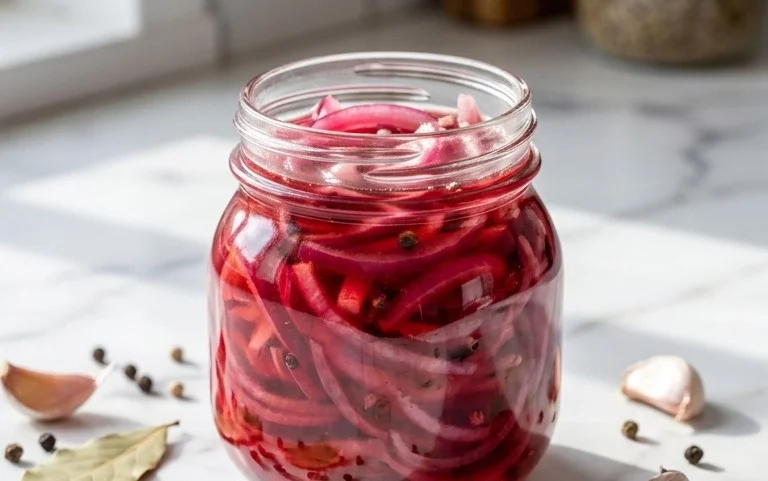
Pickled Red Onions: The Ultimate Flavor Booster
There are few things in the culinary world as transformative as a perfectly pickled red onion. These vibrant, jewel-toned slivers are more than just a garnish; they are a burst of tangy, sweet, and slightly spicy flavor that can elevate everything from tacos and salads to burgers and avocado toast. The beauty of pickling red onions lies in their simplicity. With just a handful of common ingredients and a little patience, you can create a pantry staple that will have you reaching for it time and time again. Forget those store-bought versions that often lack depth of flavor; making your own is incredibly rewarding and allows for complete control over the taste.
The magic of pickling is in the way the vinegar and sugar work together to preserve the onions while also infusing them with a delightful tang and a touch of sweetness. The red pepper flakes, if you choose to add them, provide a subtle warmth that beautifully complements the other flavors. I love having a jar of these in my refrigerator at all times, ready to add a bright, zesty punch to any meal. They are particularly fantastic on grilled meats, in grain bowls, or even mixed into a creamy dip.
Ingredients:
Instructions:
1. Preparing the Onions
The first step to achieving perfectly pickled red onions is to prepare your onions. You’ll want to start by peeling them. This is usually quite straightforward; just trim off the stem end and the root end, then make a slit down one side of the onion and peel away the papery outer layers. Once peeled, you’ll need to slice them thinly. The best way to do this is by cutting them in half lengthwise, from root to stem, and then slicing them into thin half-moons. Aim for slices that are about 1/8 inch thick. If you have a mandoline slicer, this is an excellent tool to use for consistent, paper-thin slices. If you don’t have one, a sharp knife and a steady hand will work perfectly well. The thinner you slice them, the more quickly they will pickle and the more pliable they will be once pickled. Avoid thick chunks, as these won’t absorb the brine as effectively. Place your beautifully sliced onions into a heatproof jar or a bowl that can accommodate them.
2. Creating the Brine
While your onions are waiting, it’s time to make the pickling brine. In a small saucepan, combine the 1 1/4 cups of water, 1 1/4 cups of white vinegar, 3 tablespoons of sugar, and 1 tablespoon of sea salt. If you’re opting for a touch of heat, this is also where you’ll add your red pepper flakes. I generally start with 1/4 teaspoon and then add a bit more if I want a more pronounced kick. Gently stir the mixture to help dissolve the sugar and salt. Place the saucepan over medium heat. You want to bring the mixture to a simmer, but you don’t need to boil it vigorously. Just heat it enough so that all the sugar and salt are completely dissolved. Stirring occasionally will help with this process. Once simmering and the sugar and salt are dissolved, remove the saucepan from the heat.
3. Combining Onions and Brine
Now for the satisfying part! Carefully pour the hot brine over the sliced red onions in your jar or bowl. Make sure that all the onion slices are completely submerged in the liquid. This is crucial for even pickling. If any slices are floating above the brine, gently press them down with a spoon or another small weight. The heat from the brine will begin extract to soften the onions and start the pickling process immediately. You’ll notice the onions starting to change color as they absorb the acidic brine. It’s a fascinating transformation to witness. If you’re using a jar, make sure it’s a size that snugly fits the onions and brine. This helps minimize air exposure.
4. Cooling and Infusing
Once the onions are fully submerged in the hot brine, the next step is to let them cool. Leave the jar or bowl uncovered on your kitchen counter for about 30 to 60 minutes. During this time, the onions will continue to soften and absorb the flavors of the brine. This initial cooling period allows the pickling process to begin extract in earnest. You’ll see the onions become more pliable and their color deepen. This is also when the flavors of the vinegar, sugar, and salt start to meld together. Resist the urge to put them straight into the refrigerator; allowing them to cool at room temperature helps achieve the best texture.
5. Refrigerating and Enjoying
After the initial cooling period, cover the jar or bowl tightly and transfer it to the refrigerator. Your pickled red onions will be ready to enjoy after at least an hour, but they truly shine after a few hours or even overnight. The longer they sit in the brine, the more intense the flavor will become. You’ll notice they develop a beautiful, translucent pink hue. They can be stored in the refrigerator for several weeks, making them a fantastic make-ahead condiment. When you’re ready to use them, simply drain off some of the brine (or leave a little on if you like) and add them to your favorite dishes. They are incredibly versatile and add a delightful tang and crunch to almost anything. I love using them on tacos, alongside grilled fish, on top of a hearty salad, or even just piled onto a cheese board. Enjoy your homemade flavor boost!
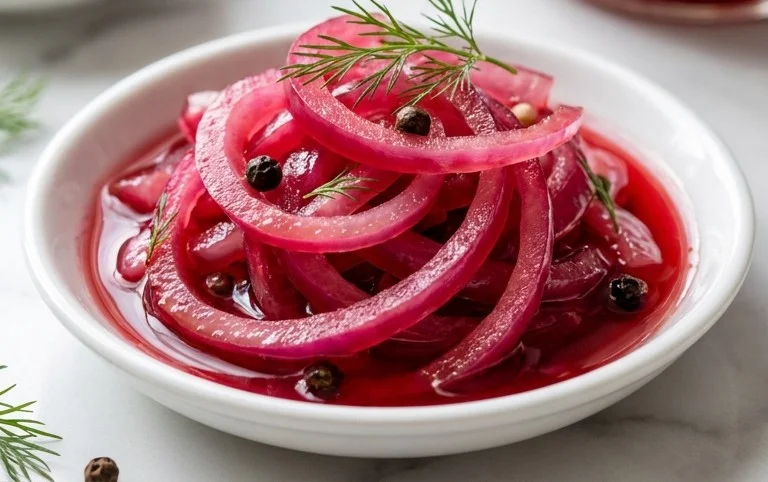
Conclusion:
There you have it – a simple yet incredibly rewarding recipe for making your own delightful pickled red onions! This vibrant condiment is a true kitchen game-changer, transforming ordinary dishes into something special with its perfect balance of tangy, sweet, and slightly peppery notes. The beauty of this recipe lies in its simplicity and the minimal ingredients required, proving that gourmet-level flavor can be achieved with very little effort. Whether you’re a seasoned cook or just starting out, I wholeheartedly encourage you to give these pickled red onions a try. You’ll be amazed at how often you reach for them!
These versatile pickled red onions are fantastic on so many things. Think piled high on tacos, burgers, and sandwiches, adding a zesty crunch. They’re also a superb accompaniment to salads, roasted vegetables, avocado toast, and even charcuterie boards. Don’t be afraid to get creative with your serving suggestions – the possibilities are truly endless!
For those looking to experiment, you can easily introduce variations. Consider adding a pinch of red pepper flakes for a touch of heat, a sprig of fresh dill or thyme during the pickling process for an herbaceous twist, or even a bay leaf for a subtle aromatic depth. The core recipe for pickled red onions is so adaptable!
Frequently Asked Questions:
How long do pickled red onions last?
Stored in an airtight container in the refrigerator, these pickled red onions will typically last for up to 2-3 weeks. Their vibrant color and tangy flavor may begin extract to mellow slightly over time, but they remain perfectly delicious.
Can I use a different type of onion?
While red onions are ideal for their color and slightly sweeter profile, you can experiment with white or yellow onions. Keep in mind that the color won’t be as vibrant, and the flavor might be a bit sharper.
What if I don’t have apple cider vinegar?
White grape juice vinegar or red grape juice vinegar are excellent substitutes for apple cider vinegar in this recipe. They will provide a similar tangin extractess. Avoid strongly flavored vinegars like balsamic, as they can overpower the delicate onion flavor.
Pickled Red Onions
Quick and easy pickled red onions that add a vibrant, tangy crunch to any dish.
Ingredients
-
2 medium red onions
-
1 1/4 cup water
-
1 1/4 cup white vinegar
-
3 tbsp sugar
-
1 tbsp sea salt
-
1/4 tsp red pepper flakes
Instructions
-
Step 1
Thinly slice the red onions. A mandoline is helpful for uniform slices. -
Step 2
In a small saucepan, combine water, white vinegar, sugar, and sea salt. Heat over medium heat, stirring until the sugar and salt are dissolved. Do not boil. -
Step 3
If using, add the red pepper flakes to the hot liquid. -
Step 4
Place the sliced onions into a heat-safe jar or container. -
Step 5
Pour the hot brine over the onions, ensuring they are fully submerged. -
Step 6
Let cool at room temperature for about 15 minutes, then refrigerate. They are best after at least 30 minutes but will keep for several weeks.
Important Information
Nutrition Facts (Per Serving)
It is important to consider this information as approximate and not to use it as definitive health advice.
Allergy Information
Please check ingredients for potential allergens and consult a health professional if in doubt.