Easy Mango Tapioca Pudding Recipe – Creamy Mango Sago
Mango Tapioca Pudding, often lovingly called Mango Sago, is a dessert that whispers of tropical sunshine and pure bliss. Imagin extracte this: plump, chewy tapioca pearls swimming in a creamy, luscious coconut milk base, all generously swirled with the vibrant, sweet nectar of ripe mangoes. It’s no wonder this delightful concoction has captured hearts and taste buds across the globe. The magic of Mango Sago lies in its perfect balance of textures and flavors – the subtle chew of the sago, the smooth richness of the coconut milk, and the explosive sweetness of fresh mango. It’s effortlessly elegant yet incredibly comforting, making it a go-to for special occasions or simply when you need a sweet escape. I’ve been making this Mango Tapioca Pudding for years, and every single time, it’s a guaranteed hit, bringin extractg smiles and satisfied sighs with every spoonful. Let’s dive into creating this little piece of paradise in your own kitchen.
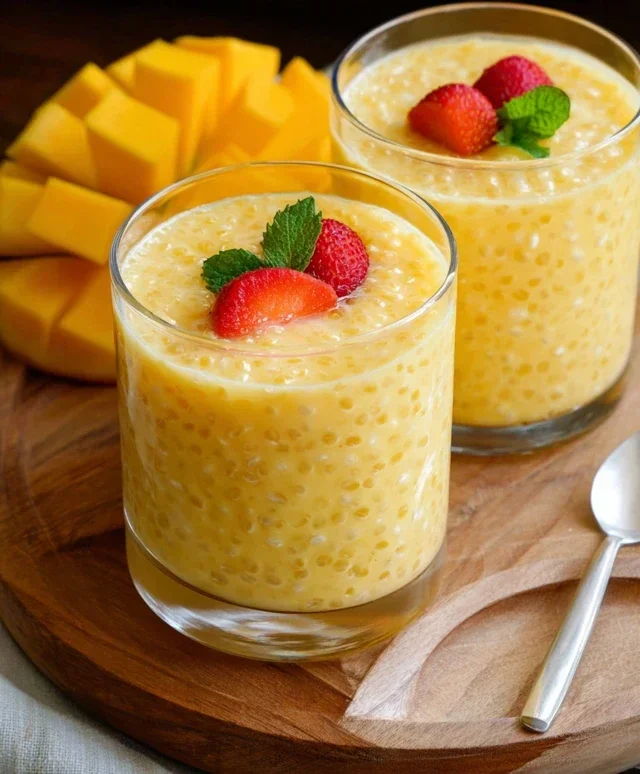
Mango Tapioca Pudding (Mango Sago)
Hello dessert lovers! Today, we’re diving into a wonderfully creamy and refreshing treat that’s perfect for warm weather or anytime you crave a taste of the tropics: Mango Tapioca Pudding, also affectionately known as Mango Sago. This dessert is a delightful fusion of chewy tapioca pearls, luscious mango, and rich coconut milk, all brought together with a touch of sweetness. It’s surprisingly simple to make and offers a burst of flavor that will transport you straight to a sun-drenched beach.
The magic of this pudding lies in its texture. The small tapioca pearls become wonderfully translucent and delightfully chewy when cooked, providing a fun contrast to the smooth, velvety mango and coconut base. It’s a dessert that’s both comforting and invigorating, making it a crowd-pleaser for all ages. Whether you’re serving it as an after-dinner delight, a light afternoon snack, or even a special brunch treat, this Mango Tapioca Pudding is sure to impress. Let’s get started on creating this tropical paradise in a bowl!
Ingredients:
Cooking Instructions:
Let’s break down the process into simple, manageable steps to ensure you achieve that perfect creamy texture and vibrant mango flavor.
Phase 1: Preparing the Tapioca Pearls
1. First things first, we need to get our tapioca pearls ready. In a large saucepan, bring the 8 cups of water to a rolling boil over high heat. Once the water is vigorously boiling, carefully add the 3/4 cup of small tapioca pearls. Stir immediately to prevent them from sticking to the bottom of the pan. Continue to cook, stirring frequently, for about 15-20 minutes, or until the tapioca pearls are mostly translucent with just a small white dot in the center. Don’t worry if they aren’t perfectly clear; they will continue to cook and become more transparent as they cool. It’s crucial to stir them often during this stage. If they start to stick or clump, gently break them apart with your spoon or whisk. Overcooking can make them too mushy, so keep an eye on them.
2. Once the tapioca pearls are cooked to your liking, drain them into a fine-mesh sieve. Rinse them thoroughly under cold running water. This rinsing step is very important as it removes excess starch, preventing the pearls from becoming gummy and ensuring they retain their distinct, chewy texture in the finished pudding. After rinsing, set the tapioca pearls aside to drain completely. You should end up with a beautifully translucent, separated batch of pearls.
Phase 2: Creating the Creamy Base
3. Now, let’s build the luscious base for our pudding. In the same saucepan (no need to wash it!), combine the 1 cup of milk and 3/4 cup of full-fat canned coconut milk. Add 2 tablespoons of the honey (or your chosen sweetener) to the pan. Place the saucepan over medium heat and gently warm the mixture, stirring occasionally, until it’s heated through but not boiling. You want to dissolve the honey and meld the flavors. Be careful not to let it boil, as this can cause the milk to scorch or the coconut milk to separate. A gentle warmth is all we need here.
Phase 3: Incorporating the Mangoes
4. While the creamy base is warming, it’s time to prepare our star ingredient: the mangoes! Peel the 3 medium-sized mangoes. The best way to do this is to slice off the cheeks of the mango, then score the flesh into a grid pattern without cutting through the skin. You can then gently push the skin from the bottom to pop out the cubes of mango, which you can easily slice off. Alternatively, you can simply scoop out the flesh with a spoon. Aim for about 2 cups of diced mango. In a blender or food processor, add about two-thirds of the diced mango. Add the remaining 1 1/2 tablespoons of honey to the blender as well. Puree the mango and honey until it’s smooth and creamy. This will form the intensely flavored mango puree that gives our pudding its signature taste and color.
Phase 4: Assembling and Chilling
5. Now, let’s bring it all together! Add the drained tapioca pearls to the warmed milk and coconut milk mixture. Gently stir to combine. Then, pour in the mango puree you just made. Stir everything together until you have a uniformly colored and smooth pudding. Taste the pudding and adjust sweetness if needed. Remember, the mangoes themselves will add a natural sweetness, so it’s best to taste before adding more honey. Once you’re happy with the flavor and consistency, it’s time to chill. Pour the mango tapioca pudding into individual serving bowls or a larger serving dish. Cover the surface directly with plastic wrap (this prevents a skin from forming) and refrigerate for at least 2-3 hours, or until thoroughly chilled and set. The pudding will thicken further as it chills.
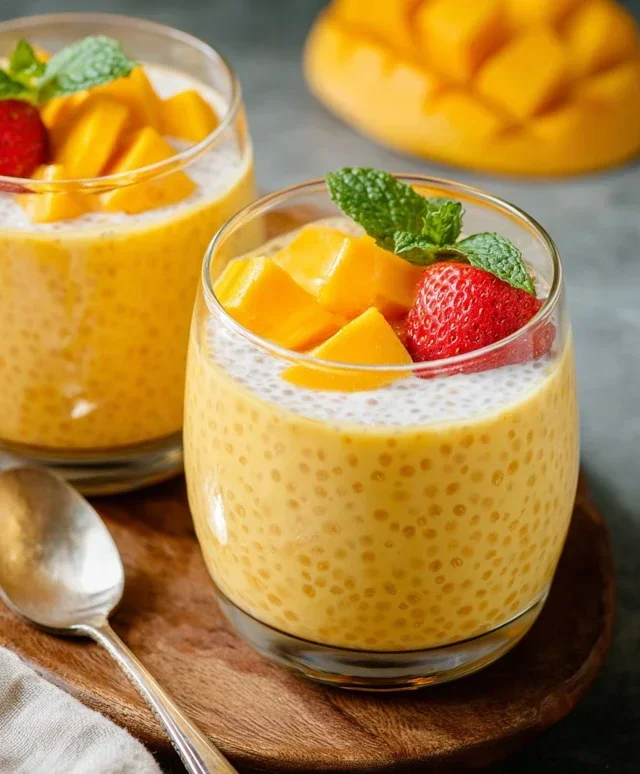
6. Just before serving, garnish your beautiful Mango Tapioca Pudding with the reserved diced mango and the 1 cup of sliced strawberries. The vibrant colors of the fruit will make your dessert look as appealing as it tastes. This dessert is best served cold, so make sure it has had ample time to chill. Enjoy the delightful combination of chewy tapioca, sweet mango, creamy coconut, and fresh, bright strawberries. It’s a truly tropical escape in every spoonful!
Conclusion:
I hope you’ve enjoyed learning how to make this delightful Mango Tapioca Pudding, also known as Mango Sago! This recipe is a true winner because it’s incredibly easy to prepare, requires minimal ingredients, and results in a dessert that’s both refreshing and satisfying. The creamy texture of the tapioca pearls perfectly complements the sweet, tropical burst of fresh mango. It’s the perfect light dessert for a warm day or a delightful treat any time of year.
I love serving this Mango Tapioca Pudding chilled, straight from the refrigerator. It’s wonderful on its own, but you can also elevate it with a sprinkle of toasted coconut flakes for an extra crunch, a drizzle of condensed milk for added sweetness, or even a few fresh mint leaves for a vibrant contrast. For variations, feel free to experiment with different mango varieties – Ataulfo mangoes offer an exceptionally smooth and sweet flavor. You could also add a touch of cardamom for an aromatic twist, or even swap out half the mango for other tropical fruits like pineapple or passionfruit. Don’t be afraid to get creative! I truly encourage you to give this recipe a try; you won’t be disappointed by the simple elegance and deliciousness of this classic dessert.
Frequently Asked Questions:
Can I make this Mango Sago pudding ahead of time?
Absolutely! This pudding is actually best made ahead of time, allowing the flavors to meld and the tapioca pearls to fully absorb the liquid. It can be stored in an airtight container in the refrigerator for up to 2-3 days.
My tapioca pearls are clumpy. How can I prevent this?
To prevent clumping, make sure to rinse the small tapioca pearls thoroughly under cold water before cooking them. Also, stir them frequently as they cook to ensure they don’t stick together. If you’re using larger tapioca pearls, soak them first according to package directions before boiling.
Can I use frozen mango for this recipe?
Yes, you can definitely use frozen mango! Thaw it completely before pureeing. Keep in mind that frozen mango might release a bit more liquid, so you might need to adjust the consistency slightly, perhaps by adding a touch more tapioca or letting it sit a little longer to thicken.
Mango Tapioca Pudding (Mango Sago)
A delightful and creamy tropical dessert featuring sweet mangoes and chewy tapioca pearls, enhanced with coconut milk and a touch of honey.
Ingredients
-
8 cups (1.9L) water
-
3/4 cup (155g) small tapioca pearls
-
1 cup (235ml) whole or 2% milk
-
3/4 cup (175ml) full-fat canned coconut milk
-
3 1/2 tablespoons honey (divided, can substitute with sugar or maple syrup)
-
3 medium-sized mangoes (about 775 to 800 grams)
-
1 cup sliced strawberries
Instructions
-
Step 1
In a large pot, bring 8 cups of water to a rolling boil. Add the tapioca pearls and cook, stirring occasionally, for about 15-20 minutes, or until the pearls are translucent with only a tiny white dot in the center. Drain the tapioca pearls and rinse them under cold water to stop the cooking process. Set aside. -
Step 2
While the tapioca is cooking, peel and dice two of the mangoes. Puree the diced mangoes in a blender or food processor until smooth. Reserve the third mango for dicing and garnishing. -
Step 3
In a separate saucepan, combine the milk, coconut milk, and 2 tablespoons of honey. Heat gently over medium-low heat, stirring until the honey is dissolved and the mixture is warm but not boiling. Remove from heat. -
Step 4
Add the cooked tapioca pearls and the mango puree to the warm milk mixture. Stir well to combine. -
Step 5
Refrigerate the pudding for at least 2-3 hours, or until thoroughly chilled. This allows the flavors to meld and the pudding to thicken. -
Step 6
Before serving, dice the remaining mango and slice the strawberries for garnish. Stir in the remaining 1 1/2 tablespoons of honey into the chilled pudding (or to taste). Top each serving with fresh mango cubes and sliced strawberries.
Important Information
Nutrition Facts (Per Serving)
It is important to consider this information as approximate and not to use it as definitive health advice.
Allergy Information
Please check ingredients for potential allergens and consult a health professional if in doubt.