Easy Japchae Korean Glass Noodle Stir Fry Recipe
Japchae, the beloved Korean glass noodle stir fry, is a dish that truly sings on the palate. There’s something utterly magical about the way the translucent, chewy sweet potato noodles, or dangmyeon, soak up all the vibrant flavors of the sauce. It’s no wonder this dish is a staple at Korean celebrations and family gatherings. People adore Japchae for its delightful textural contrast – the satisfying chew of the noodles mingling with the crisp-tender vegetables and savory protein. What makes Japchae so special is its harmonious blend of sweet, savory, and subtly nutty notes, all brought together by a delicate soy-sesame dressing. It’s a visual feast too, with a rainbow of colorful ingredients that promises a healthy and incredibly delicious experience. Get ready to unlock the secrets to making this iconic Korean classic right in your own kitchen!
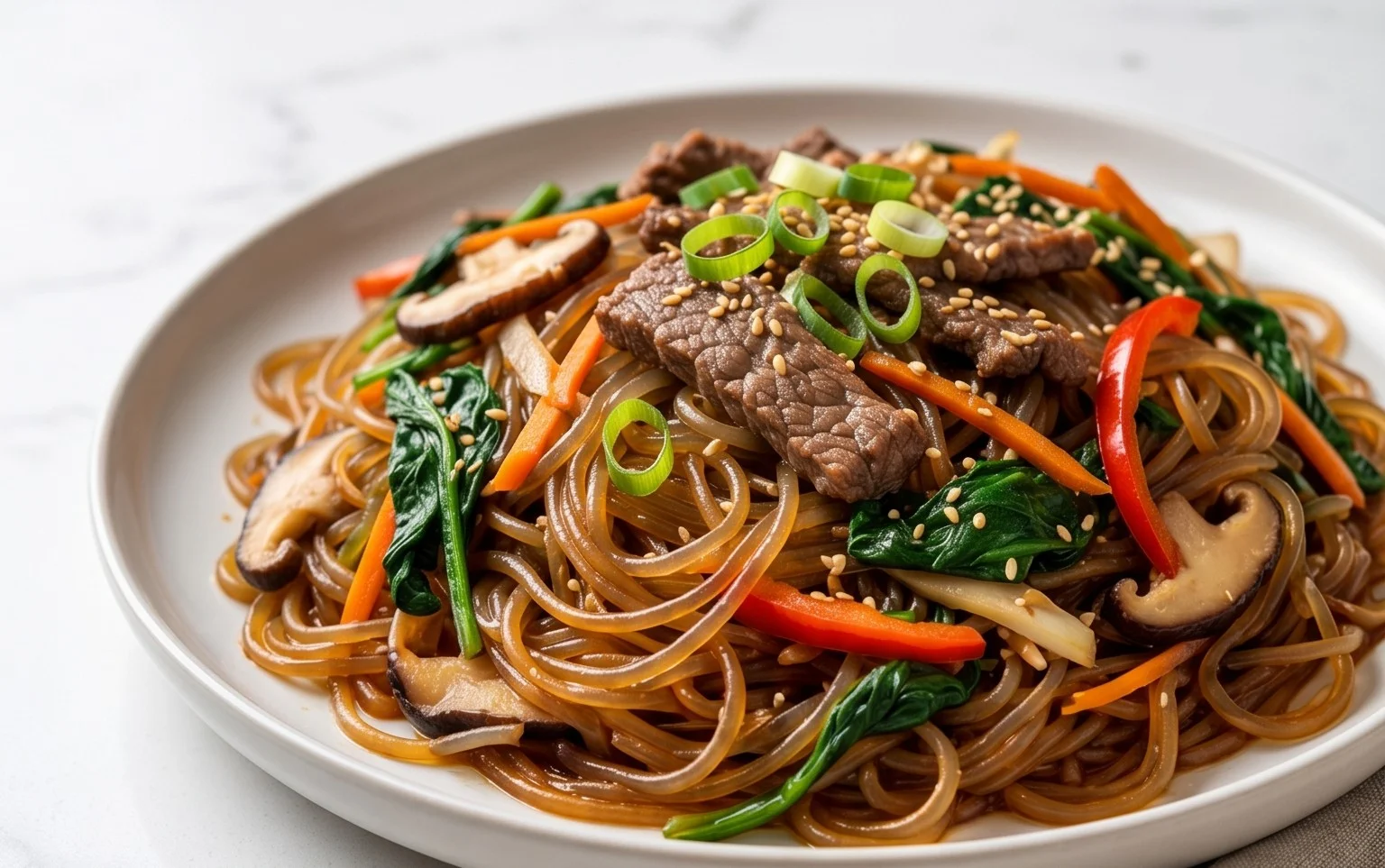
Japchae (Korean Glass Noodle Stir Fry)
Japchae is a quintessential Korean dish, a delightful stir-fry of chewy sweet potato glass noodles, vibrant vegetables, and savory protein, all tossed in a sweet and savory soy-sesame sauce. It’s a dish that’s both beautiful to look at and incredibly satisfying to eat, making it a popular choice for gatherings, holidays, or simply a delicious weeknight meal. The beauty of Japchae lies in its versatility; you can customize the vegetables and protein to your liking. The textures are a dance of tender noodles, crisp vegetables, and succulent meat, all harmonizing with the rich sauce. Let’s get started on making this Korean classic in your own kitchen!
Ingredients:
Cooking Instructions:
1. Preparing the Noodles and Vegetables:
The foundation of Japchae is the sweet potato glass noodles. Start by rinsing the noodles under cold water to remove any starch. Then, in a large pot of boiling water, cook the noodles according to package directions, usually around 6-8 minutes, until they are translucent and chewy, but not mushy. It’s important not to overcook them, as they will continue to cook slightly when stir-fried. Once cooked, drain the noodles and rinse them briefly with cold water to stop the cooking process and prevent them from sticking. You can then toss them with about 1 tablespoon of your toasted sesame oil and a pinch of salt to keep them from clumping and to start building flavor. Next, let’s prepare our vegetables. Julienne your carrot, thinly slice your onion, and slice your mushrooms. Wash your baby spinach thoroughly. Cut your green onions into 1-inch pieces. Having all your ingredients prepped and ready before you start stir-frying is key to a smooth cooking process.
2. Marinating and Cooking the Beef:
For the beef, you’ll want to cut it into thin, bite-sized strips. In a bowl, marinate the beef with about 1 tablespoon of soy sauce, a pinch of black pepper, and a tiny drizzle of sesame oil. Let it sit for at least 15-20 minutes while you prepare the other components. Heat about 1 tablespoon of oil in a large skillet or wok over medium-high heat. Add the marinated beef and stir-fry until it’s just cooked through and slightly browned. Be careful not to overcrowd the pan; cook in batches if necessary. Once cooked, remove the beef from the skillet and set it aside. This step ensures the beef is tender and flavorful without becoming tough.
3. Stir-Frying the Aromatics and Vegetables:
In the same skillet, add another tablespoon of oil if needed. Add the thinly sliced yellow onion and cook until softened and translucent, about 3-5 minutes. Then, add the julienned carrots and sliced mushrooms to the skillet. Stir-fry for another 3-4 minutes, until the vegetables are tender-crisp. You want them to retain a slight bite. Season lightly with salt and pepper. Finally, add the baby spinach to the skillet. Stir-fry just until it wilts, which will only take about 1-2 minutes. Remove all the cooked vegetables from the skillet and set them aside with the beef. This separation allows us to control the cooking of each component and ensures nothing gets overcooked.
4. Creating the Japchae Sauce and Assembling:
Now for the star of the show – the sauce! In a small bowl, whisk together the 7 tablespoons of soy sauce, 3 tablespoons of honey, 2 tablespoons of brown sugar, and the remaining 1 tablespoon of toasted sesame oil. Taste and adjust the sweetness and saltiness to your preference. This sauce is what brings all the elements of Japchae together. In your large skillet or wok, add the cooked glass noodles. Pour about half of the prepared sauce over the noodles and toss to coat evenly. Heat over medium heat for about 2 minutes, allowing the noodles to absorb the flavor.
5. Combining and Finishing the Dish:
It’s time to bring everything together! Add the cooked beef, stir-fried vegetables (onions, carrots, mushrooms, and spinach), and the green onion pieces to the skillet with the noodles. Pour the remaining sauce over the ingredients. Gently toss everything together until well combined and heated through, about 2-3 minutes. You want all the flavors to meld beautifully. If the noodles seem a bit dry, you can add a tablespoon or two of water or broth. Finally, create thin omelets by whisking the 2 large eggs with a pinch of salt and pepper. Cook them in a lightly oiled non-stick pan until set, then slice them into thin strips for garnish. Serve the Japchae immediately, garnished with the egg ribbons and a sprinkle of toasted sesame seeds if desired. The aroma alone is enough to make your mouth water!
Conclusion:
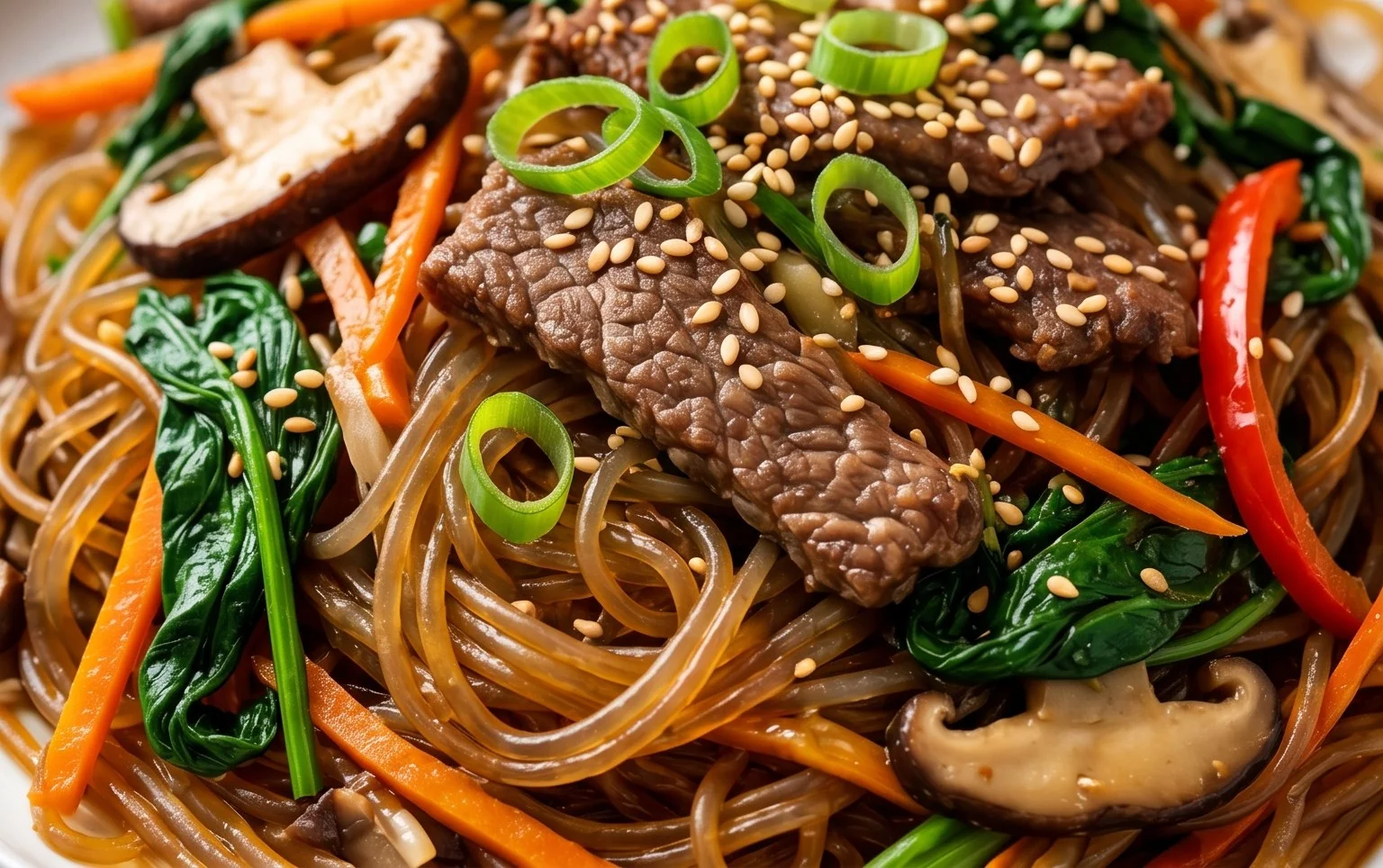
I hope you’re as excited as I am to dive into making Japchae! This Korean glass noodle stir fry is an absolute winner for so many reasons. It’s incredibly versatile, allowing you to customize it with your favorite vegetables and proteins. The chewy texture of the sweet potato noodles, combined with the savory soy sauce and sesame oil dressing, creates a symphony of flavors and textures that is truly satisfying. It’s also a fantastic dish for gatherings, as it can be served warm or at room temperature, and it’s naturally gluten-free if you use tamari instead of soy sauce.
For serving, Japchae is wonderful on its own as a hearty meal, but it also makes a delightful side dish to Korean BBQ, grilled meats, or even as part of a larger Korean meal spread. Don’t hesitate to get creative with variations! Feel free to add thinly sliced beef, beef, shrimp, or tofu for extra protein. Explore different vegetables like bell peppers, snow peas, or even mushrooms. The possibilities are endless, and the result is always delicious. I truly encourage you to give this Japchae recipe a try – you won’t be disappointed!
Frequently Asked Questions:
Can I make Japchae ahead of time?
Yes, you can! Japchae is actually quite good at room temperature, making it an ideal make-ahead dish for parties or meal prep. If making it ahead, it’s best to slightly undercook the noodles and vegetables so they don’t become too mushy when reheated. You might also want to reserve some of the dressing to toss with it just before serving to refresh the flavors.
What are Korean glass noodles made of?
The “glass noodles” in Japchae are typically made from sweet potato starch. This is what gives them their signature translucent appearance when cooked and their wonderfully chewy, slippery texture. They absorb flavors beautifully, making them the perfect canvas for the savory Japchae sauce.
How can I make Japchae vegetarian or vegan?
To make Japchae vegetarian, simply omit any meat and focus on a generous selection of colorful vegetables. For a vegan version, ensure you use a vegan-friendly soy sauce (like tamari) and skip any animal-based protein. You can add extra firm tofu, pan-fried until golden brown, for a plant-based protein boost.
Japchae (Korean Glass Noodle Stir Fry)
A classic Korean stir-fry featuring chewy sweet potato glass noodles, tender marinated beef, and a colorful assortment of vegetables. This dish is savory, slightly sweet, and perfect for sharing.
Ingredients
-
12 ounces sweet potato glass noodles
-
16 ounces beef, cut into strips
-
2 large eggs, beaten
-
1 large carrot, peeled and julienned
-
1 medium yellow onion, thinly sliced
-
3 mushrooms, thinly sliced
-
2 cups baby spinach, packed
-
2 stalks green onion, cut into 1 inch pieces
-
oil, for cooking
-
toasted sesame seeds, for garnish (optional)
-
salt and black pepper, as needed
-
7 tablespoons soy sauce (light sodium)
-
3 tablespoons honey
-
2 tablespoons brown sugar
-
2 tablespoons toasted sesame oil
Instructions
-
Step 1
Cook the glass noodles according to package directions. Drain, rinse with cold water, and set aside. In a large bowl, toss the cooked noodles with 1 tablespoon of soy sauce and 1 tablespoon of toasted sesame oil. -
Step 2
In a separate bowl, marinate the beef strips with 2 tablespoons of soy sauce, 1 tablespoon of honey, 1 tablespoon of brown sugar, salt, and pepper. Let it sit for at least 15 minutes. -
Step 3
Heat 1 tablespoon of oil in a large skillet or wok over medium-high heat. Add the marinated beef and stir-fry until browned. Remove beef from the skillet and set aside. -
Step 4
Add another tablespoon of oil to the skillet. Stir-fry the julienned carrots and thinly sliced onions until tender-crisp, about 3-4 minutes. Add the sliced mushrooms and cook for another 2 minutes. -
Step 5
Push the vegetables to one side of the skillet. Pour the beaten eggs into the empty side and scramble them. Once cooked, break the scrambled eggs into pieces and mix with the vegetables. -
Step 6
Add the cooked noodles, stir-fried beef, and baby spinach to the skillet. In a small bowl, whisk together the remaining 4 tablespoons of soy sauce, 2 tablespoons of honey, 1 tablespoon of brown sugar, and 1 tablespoon of toasted sesame oil. Pour this sauce over the ingredients in the skillet. -
Step 7
Toss everything together gently until well combined and heated through. Stir in the green onions. -
Step 8
Season with salt and pepper to taste. Garnish with toasted sesame seeds if desired.
Important Information
Nutrition Facts (Per Serving)
It is important to consider this information as approximate and not to use it as definitive health advice.
Allergy Information
Please check ingredients for potential allergens and consult a health professional if in doubt.