Gluten-Free Teriyaki Salmon Sushi Bowl Recipe
Teriyaki Salmon Sushi Bowl (GF) is more than just a meal; it’s an explosion of vibrant flavors and delightful textures that has captivated home cooks and food lovers alike. Imagin extracte the perfectly cooked, slightly sweet, and savory teriyaki-glazed salmon flakes mingling with fluffy sushi rice, crisp, fresh vegetables, and a hint of tangy gin extractkled ginger. It’s no wonder this dish has become a go-to for a quick, healthy, yet incredibly satisfying weeknight dinner or an impressive lunch option. What truly elevates this Teriyaki Salmon Sushi Bowl (GF) is its ability to deliver that authentic sushi bar experience right in your own kitchen, without the fuss. The gluten-free aspect also opens up this deliciousness to a wider audience, ensuring everyone can savor its unique charm and nourishing goodness. Get ready to fall in love with this easy-to-make, incredibly flavorful culinary creation!
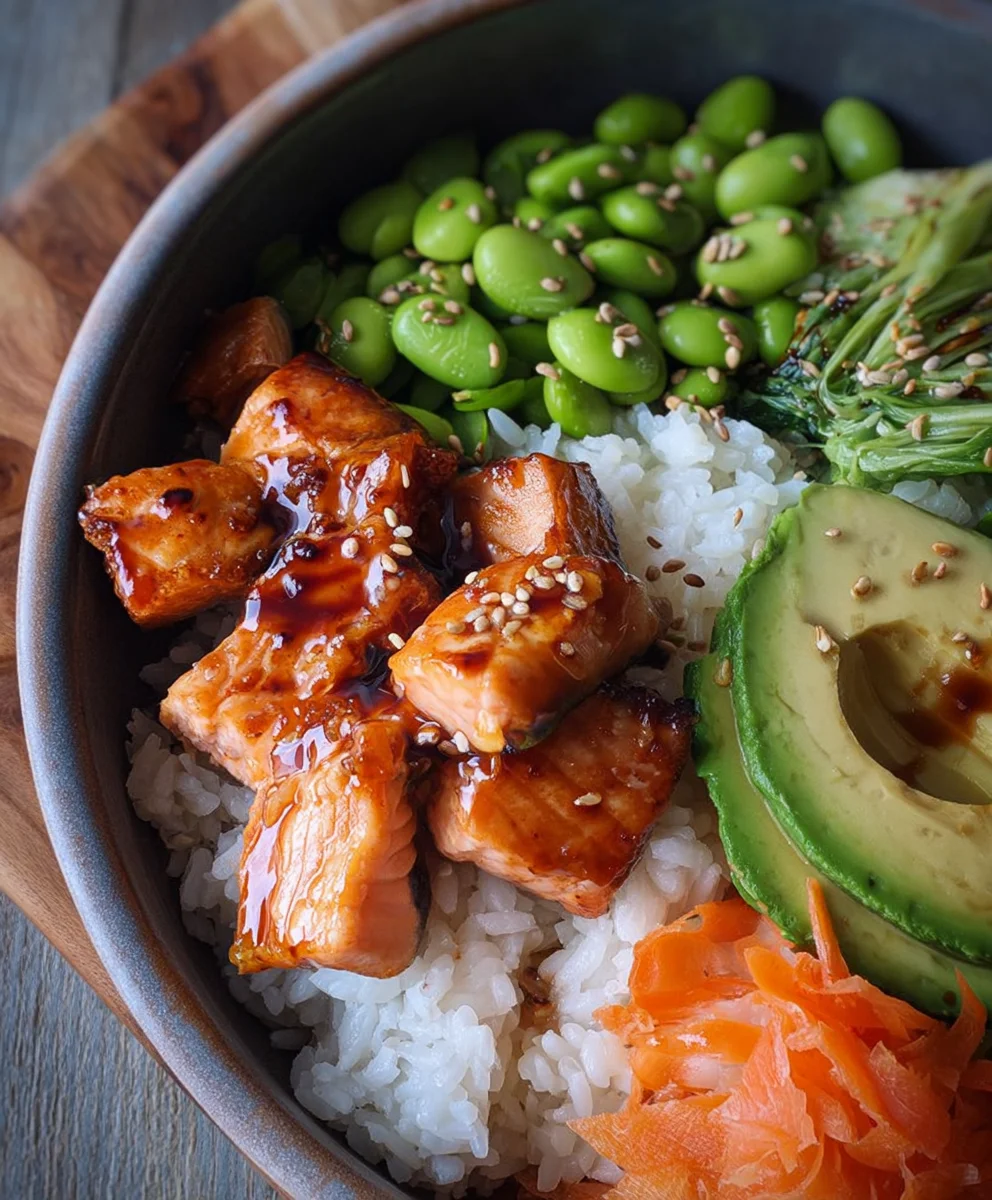
Ingredients:
- 180g (6.5oz) sushi rice
- 3 tbsp rice vinegar
- 1 tsp caster sugar
- 0.5 tsp fine salt
- 30ml (1fl oz) maple syrup
- 1 tsp sesame oil
- 2 tsp gluten free tamari soy sauce
- 0.5 tsp garlic granules
- 1 tsp non-non-non-alcoholic alternativeic non-alcoholic mirin
- 2 salmon fillets
- 2 tbsp sesame seeds
- 4 spring onions
- 150g (5oz) edamame beans
- Half a ripe avocado
Preparing the Sushi Rice
To begin extract our delicious Teriyaki Salmon Sushi Bowl, the foundation is perfectly cooked sushi rice. Start by thoroughly rinsing the sushi rice under cold running water. You’ll want to do this several times until the water runs clear, which helps remove excess starch and prevents the rice from becoming gummy. Once rinsed, drain the rice well and transfer it to a medium saucepan. Add 200ml (approximately 7fl oz) of cold water to the pan – this is the standard ratio for most sushi rice, but always check your specific rigin extractpackaging for best results. Bring the water to a boil over medium-high heat, then immediately reduce the heat to the lowest setting, cover the pan tightly, and let it simmer for about 15 minutes. Resist the urge to lift the lid during this time! After 15 minutes, remove the pan from the heat and let it steam, still covered, for another 10 minutes. This steaming step is crucial for ensuring fluffy, perfectly cooked grains.
While the rice is steaming, let’s prepare the sushi vinegar. In a small bowl, combine the 3 tablespoons of rice vinegar, 1 teaspoon of caster sugar, and 0.5 teaspoon of fine salt. Whisk these ingredients together until the sugar and salt are completely dissolved. Once the rice has finished steaming, gently fluff it with a fork or a rice paddle. Then, gradually pour the sushi vinegar mixture over the hot rice, folding it in gently with your rice paddle or a spatula. Be careful not to mash the rice; the goal is to evenly distribute the vinegar. Allow the rice to cool to room temperature, which helps it absorb the vinegar and achieve that classic sushi rice texture. You can cover it with a damp kitchen towel to prevent it from drying out.
Crafting the Teriyaki Salmon
Now for the star of our bowl: the teriyaki salmon. Pat your 2 salmon fillets dry with paper towels. This step is important for achieving a nice sear and preventing the salmon from steaming in its own juices. In a small bowl, whisk together the 30ml (1fl oz) of maple syrup, 1 teaspoon of sesame oil, 2 teaspoons of gluten-free tamari soy sauce, 0.5 teaspoon of garlic granules, and non-alcoholic alternativeoon of non-non-alcoholic mirinolicolic mirin. This simple teriyaki glaze is packed with flavor and perfectly complements the richness of the salmon. If you like a little more kick, feel free to add a pinch of red pepper flakes.
Heat a non-stick skillet over medium-high heat. Once the pan is hot, add a teaspoon of oil (any neutral cooking oil like vegetable or canola will work) and then place the salmon fillets, skin-side down if they have skin, into the hot skillet. Sear the salmon for about 3-4 minutes until the skin is crispy and golden brown. Carefully flip the fillets and pour the prepared teriyaki glaze over the top of the salmon. Reduce the heat to medium-low, cover the skillet if possible, and let the salmon cook for another 4-6 minutes, basting occasionally with the glaze from the pan. The cooking time will depend on the thickness of your salmon fillets. You’re looking for the salmon to be cooked through but still moist and flaky. Once cooked, remove the salmon from the pan and set it aside to rest for a couple of minutes. The remaining glaze in the pan can be reduced further by simmering it for another minute or two if you desire a thicker sauce.
Assembling Your Sushi Bowl
It’s time to bring everything together to create our beautiful and delicious Teriyaki Salmon Sushi Bowl! First, let’s prepare our fresh garnishes. Wash and thinly slice the 4 spring onions. Slice half of a ripe avocado into thin, fan-like pieces. If your 150g (5oz) of edamame beans are frozen, you’ll want to cook them according to package instructions, usually by boiling or steaming for a few minutes until tender. Drain them well and set them aside. For an extra layer of texture and flavor, we’ll toast the 2 tablespoons of sesame seeds. Heat a dry skillet over medium heat and add the sesame seeds. Toast them for 2-3 minutes, stirring frequently, until they are fragrant and lightly golden. Be careful not to burn them, as they can turn bitter quickly. Set these aside.
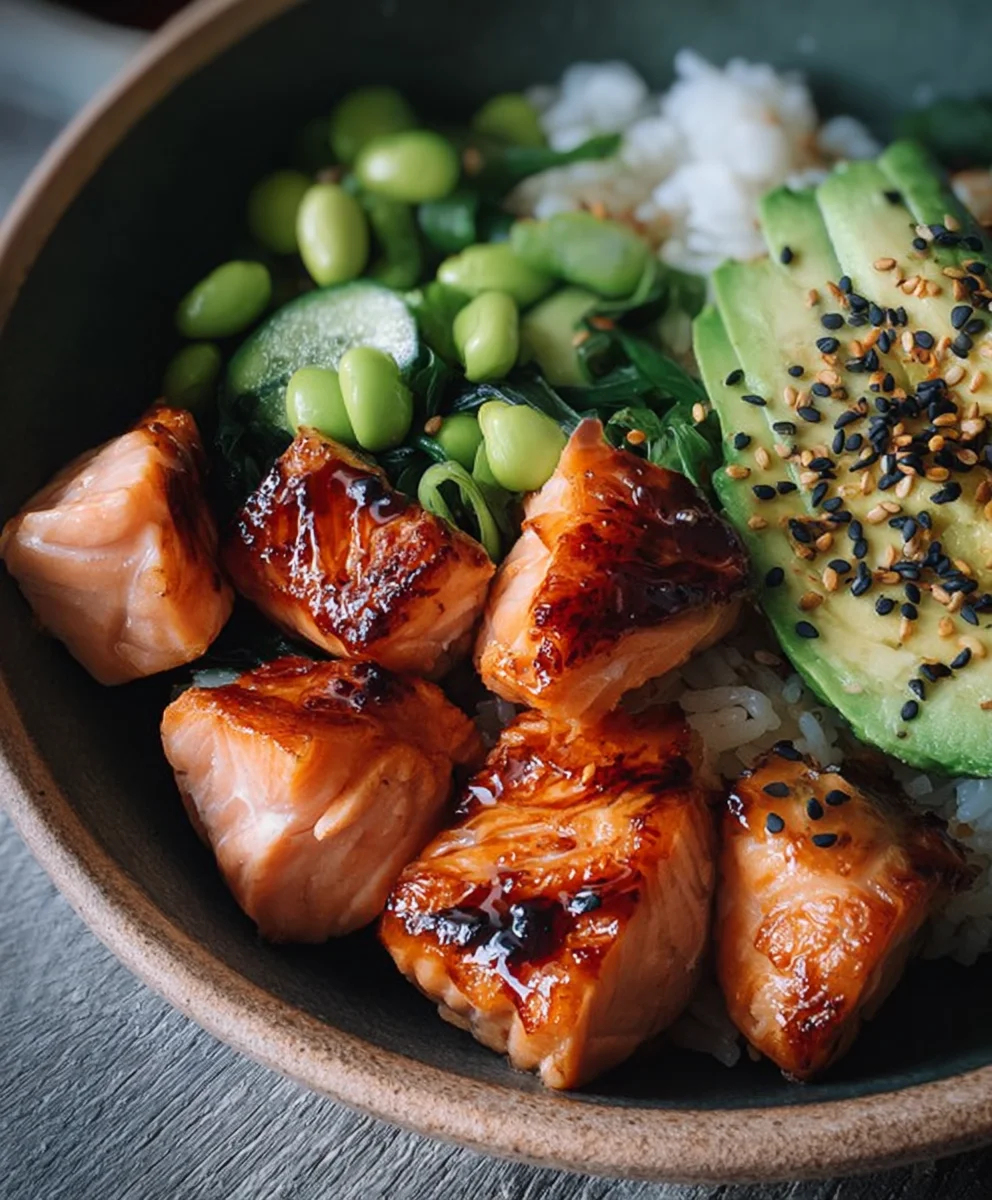
To assemble your bowl, start with a generous serving of the prepared sushi rice at the bottom of each bowl. Arrange the teriyaki salmon fillet on top of the rice. You can either place it whole or flake it into large pieces. Next, artfully arrange the prepared edamame beans and the sliced avocado around the salmon. Scatter the sliced spring onions over the top of the bowl for a burst of fresh flavor and color. Finally, sprinkle the toasted sesame seeds generously over everything. If you have any extra teriyaki glaze left from cooking the salmon, you can drizzle a little more over the bowl for added moisture and flavor. This Teriyaki Salmon Sushi Bowl is best enjoyed immediately while the rice and salmon are still warm.
Conclusion:
And there you have it – your delicious and vibrant Teriyaki Salmon Sushi Bowl (GF) is ready to be enjoyed! This recipe proves that you don’t need to be a sushi master to create a restaurant-quality dish at home. The balance of savory teriyaki-glazed salmon, fluffy rice, fresh vegetables, and creamy avocado makes for a truly satisfying meal. It’s a fantastic option for a weeknight dinner that feels special, or for a light and healthy lunch.
I love serving my Teriyaki Salmon Sushi Bowl (GF) with an extra drizzle of teriyaki sauce and a sprinkle of toasted sesame seeds for added texture and flavor. You can also pair it with a side of pickled gin extractger or a small bowl of miso soup for an authentic touch.
Don’t be afraid to get creative with your additions! Consider adding edamame for extra protein and crunch, thinly sliced cucumber for coolness, or even some crunchy fried onions for a delightful textural contrast. For a spicier kick, a drizzle of sriracha or a few slices of jalapeño would be wonderful.
I truly hope you enjoy making and eating this Teriyaki Salmon Sushi Bowl (GF) as much as I do. It’s a versatile and adaptable recipe that’s sure to become a favorite in your culinary repertoire. Happy cooking!
Frequently Asked Questions:
Can I use a different type of fish instead of salmon for the Teriyaki Salmon Sushi Bowl (GF)?
Absolutely! While salmon is fantastic, you could certainly substitute it with other firm, flaky fish like cod, halibut, or even tuna. For a vegetarian or vegan option, you could use marinated tofu or tempeh, pan-fried until golden brown. Just ensure your marinade has a similar sweet and savory profile.
How can I make the Teriyaki Salmon Sushi Bowl (GF) ahead of time?
You can prepare some components in advance. Cook the rice and let it cool completely. Prepare the teriyaki sauce and cook the salmon, then store them separately in airtight containers in the refrigerator. Chop your vegetables and prepare your toppings. When you’re ready to eat, simply assemble the bowl and reheat the salmon if desired, or enjoy it cold.
Gluten-Free Teriyaki Salmon Sushi Bowl
A healthy and delicious gluten-free sushi bowl featuring flaky teriyaki salmon, perfectly seasoned sushi rice, and fresh toppings.
Ingredients
-
180g (6.5oz) sushi rice
-
3 tbsp rice vinegar
-
1 tsp caster sugar
-
0.5 tsp fine salt
-
30ml (1fl oz) maple syrup
-
1 tsp sesame oil
-
2 tsp gluten free tamari soy sauce
-
0.5 tsp garlic granules
-
1 tsp non-alcoholic mirin
-
2 salmon fillets
-
2 tbsp sesame seeds
-
4 spring onions
-
150g (5oz) edamame beans
-
Half a ripe avocado
Instructions
-
Step 1
Rinse sushi rice thoroughly under cold water until water runs clear. Drain and transfer to a saucepan with 200ml cold water. Bring to a boil, then reduce heat to low, cover, and simmer for 15 minutes. Remove from heat and let steam, covered, for another 10 minutes. -
Step 2
While rice steams, combine rice vinegar, caster sugar, and salt in a small bowl, whisking until dissolved. Once rice has steamed, fluff gently and gradually fold in the vinegar mixture. Cover with a damp towel and let cool to room temperature. -
Step 3
Pat salmon fillets dry. Whisk together maple syrup, sesame oil, gluten-free tamari, garlic granules, and non-alcoholic mirin in a small bowl. Heat a non-stick skillet over medium-high heat with a teaspoon of oil. Sear salmon for 3-4 minutes until crispy. -
Step 4
Flip salmon fillets, pour teriyaki glaze over them. Reduce heat to medium-low, cover, and cook for 4-6 minutes, basting occasionally. Remove salmon to rest. -
Step 5
Wash and thinly slice spring onions. Slice avocado. Cook edamame beans according to package instructions. Toast sesame seeds in a dry skillet over medium heat until fragrant and lightly golden. -
Step 6
Assemble bowls: start with a base of sushi rice. Top with teriyaki salmon (whole or flaked). Arrange edamame beans and avocado around the salmon. Scatter with sliced spring onions and toasted sesame seeds. Drizzle with extra glaze if desired.
Important Information
Nutrition Facts (Per Serving)
It is important to consider this information as approximate and not to use it as definitive health advice.
Allergy Information
Please check ingredients for potential allergens and consult a health professional if in doubt.